Ozone Control Scheme and Design Considerations in Corona Discharge Workshops
The amount of ozone generated in corona discharge workshops can be controlled through a highly efficient catalytic decomposition system. By employing a suitable catalyst and airflow matching design, the ozone concentration in the exhaust gas can be reduced to below safe standards, while ensuring continuous production and operational safety. The design scheme should consider ozone generation intensity, duct layout, catalyst filling method, and ease of maintenance.
Ozone Generation Mechanism and Emission Characteristics
During corona discharge, high voltage causes oxygen molecules in the air to decompose into single oxygen atoms, which further combine with oxygen molecules to form ozone. The ozone concentration in the workshop is affected by voltage intensity, air humidity, airflow velocity, and discharge time. Ozone, as a strong oxidant, is not only harmful to human health but can also cause oxidative damage to equipment and plastic film products. Therefore, accurately assessing ozone generation is fundamental to designing a treatment system.
Hazard Assessment and Control Objectives
Prolonged exposure to high concentrations of ozone can cause respiratory irritation, equipment corrosion, and product quality degradation. When designing a treatment plan, the ozone concentration in the exhaust gas should be controlled below national or industry safety standards, while ensuring air circulation within the workshop to prevent ozone accumulation. Control objectives include: the rate of ozone concentration reduction, reaction time, and system stability.
 Treatment Technology Selection
Currently, catalytic decomposition technology is mainly used for ozone treatment in industrial corona-treated workshops. Catalysts can decompose ozone into oxygen at room temperature or low temperatures. Compared to adsorption or dilution methods, catalytic decomposition is more efficient, consumes less energy, and requires less system space. When selecting a catalyst, its activity, moisture resistance, lifespan, and pressure drop must be considered to ensure long-term stable operation.
Catalytic Decomposition System Design
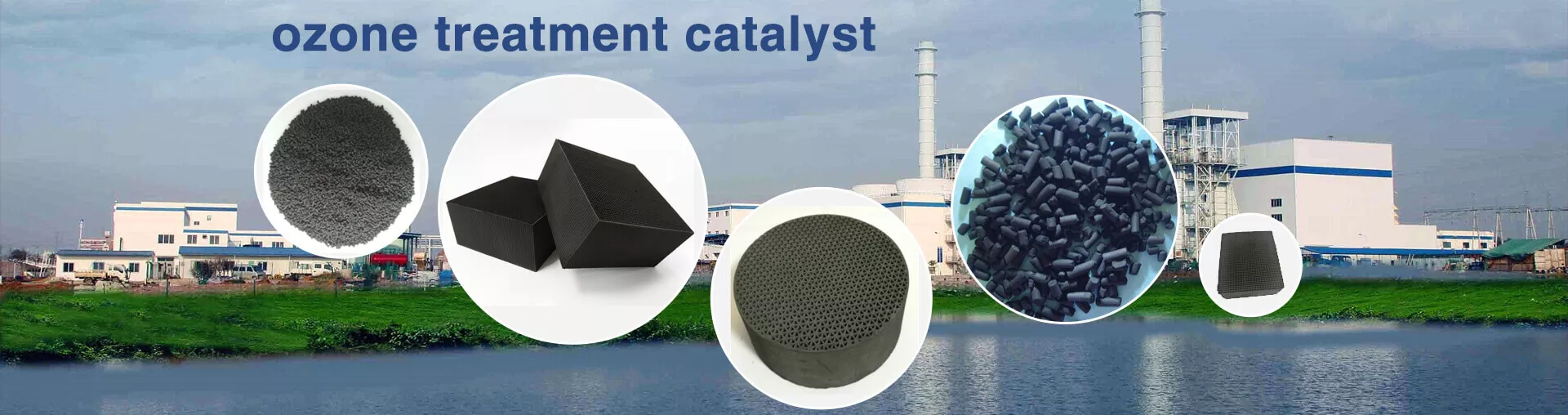
System design should include duct layout, catalyst filling method, airflow matching, and ease of maintenance. The air duct should avoid dead zones to ensure uniform ozone contact with the catalyst. The catalyst packing can utilize a honeycomb or granular bed structure to increase the contact area. The airflow design must ensure sufficient gas residence time for the catalytic reaction to proceed fully. If necessary, multi-stage catalytic beds can be implemented to achieve the stepwise degradation of high-concentration ozone.
System Optimization and Operation Management
Treatment Technology Selection
Currently, catalytic decomposition technology is mainly used for ozone treatment in industrial corona-treated workshops. Catalysts can decompose ozone into oxygen at room temperature or low temperatures. Compared to adsorption or dilution methods, catalytic decomposition is more efficient, consumes less energy, and requires less system space. When selecting a catalyst, its activity, moisture resistance, lifespan, and pressure drop must be considered to ensure long-term stable operation.
Catalytic Decomposition System Design
System design should include duct layout, catalyst filling method, airflow matching, and ease of maintenance. The air duct should avoid dead zones to ensure uniform ozone contact with the catalyst. The catalyst packing can utilize a honeycomb or granular bed structure to increase the contact area. The airflow design must ensure sufficient gas residence time for the catalytic reaction to proceed fully. If necessary, multi-stage catalytic beds can be implemented to achieve the stepwise degradation of high-concentration ozone.
System Optimization and Operation Management
To ensure long-term efficient operation, the system should be equipped with a detection device to monitor ozone concentration in real time and adjust catalytic reaction conditions according to airflow, temperature, and humidity. Simultaneously, catalyst activity and dust accumulation in the air ducts should be checked regularly to extend system lifespan. System layout should consider operational safety, ensuring personnel are kept away from areas with high ozone concentrations.
author:kaka
date:2026/5/19
 ∷
∷

 minstrong