Welcome: Hunan Minstrong Technology Co., Ltd
Language:
 ∷
∷

∷
∷
Amid growing concerns over air quality,
ozone pollution has emerged as a prominent environmental issue following PM2.5.
As a highly oxidizing gas, high concentrations of ozone not only irritate the
human respiratory tract but also adversely affect crop growth. Ozone
destruction catalysts, serving as the core materials for addressing this
problem, have their performance directly determining the purification
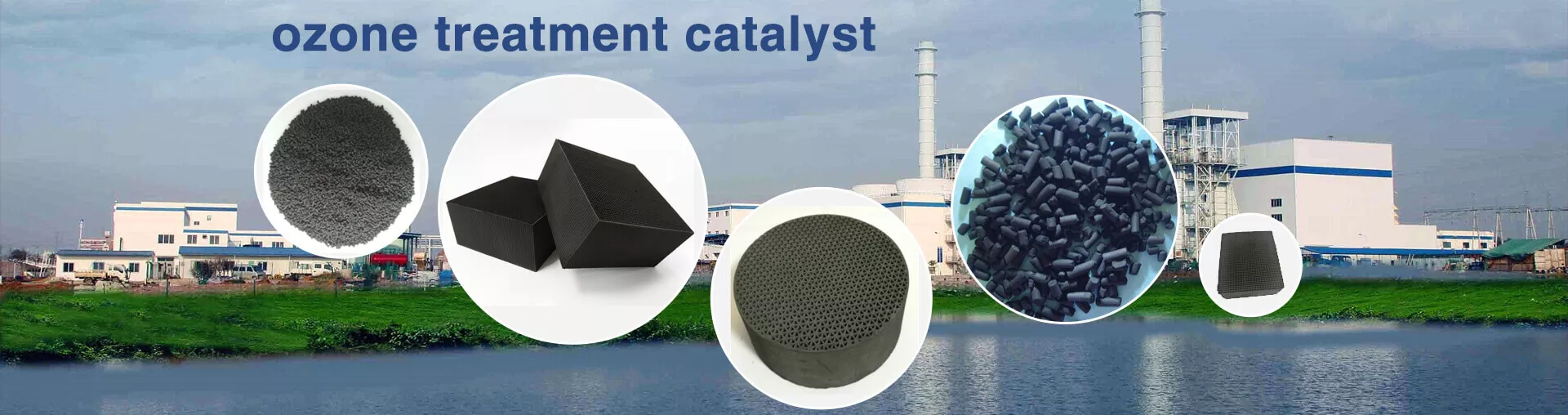
effectiveness. Among various forms such as columnar, irregular granules,
powder, and honeycomb, granular ozone destruction catalysts have become the
preferred choice in numerous application scenarios due to their notable
advantages.
Different forms of ozone destruction
catalyst possess distinct characteristics but also exhibit clear limitations.
Columnar catalysts, while easy to fill, suffer from significant internal mass
transfer resistance and are prone to uneven reactions under complex operating
conditions. Powder catalysts offer a high specific surface area but are
characterized by extremely low strength and a tendency to be carried away,
requiring additional filtration devices during treatment, which increases application
costs. Honeycomb catalysts are suitable for high air volume scenarios, but
their molding process is complex, demanding stringent reaction conditions, and
they pose higher challenges in replacement and maintenance. These shortcomings
of other forms further highlight the advantages of granular catalysts.
High activity stands as the core
competitiveness of granular ozone destruction catalysts. Their unique granular
structure allows for uniform dispersion of active components, enabling full
contact with ozone molecules and rapid initiation of catalytic reactions under
normal temperature and pressure to efficiently decompose ozone into harmless
oxygen. Compared to issues such as the reaction lag of columnar catalysts and
the rapid activity decay of powder catalysts, granular catalysts can improve
ozone removal rates by 15%–20% under identical operating conditions,
demonstrating even more stable performance, particularly in low-concentration
ozone treatment.
The dual advantages of high specific
surface area and high strength enable granular catalysts to adapt to most
operating conditions. Through optimized preparation processes, a rich pore
structure is formed internally, achieving a specific surface area of 100–300
m²/g, which provides ample active sites for reactions. Simultaneously, the
granular structure enhances its compressive strength to above 50N, effectively
preventing breakage caused by airflow impact. Whether in the high-temperature
and high-humidity environments of industrial exhaust treatment or the
room-temperature conditions of indoor air purification, granular catalysts
maintain stable performance.
In practical applications, granular ozone
destruction catalysts demonstrate strong utility. In exhaust treatment towers
within chemical industrial parks, they can work synergistically with other
purification materials to efficiently remove ozone from tail gases. In urban
air purification stations, their convenient filling method reduces the
difficulty of equipment modification. In civilian air purifiers, the granular
form avoids the risk of powder leakage, enhancing usage safety.
As environmental requirements continue to
rise, the demand for ozone control will keep growing. Granular ozone
destruction catalysts, with their comprehensive advantages of high activity,
high specific surface area, and high strength, along with their adaptability to
diverse operating conditions, are poised to play an increasingly important role
in the field of air pollution control, providing reliable technical support for
safeguarding clean air.
Contact: Candyly
Phone: +8618142685208
Tel: 0086-0731-84115166
Email: sales@minstrong.com
Add: E2 Building, Kinglory Science And Technology Industrial Park, Wangcheng Area, Changsha, Hunan, China.
 minstrong